
Table of Contents
Ever wish you could bottle up a moment from your travels—the curve of a quiet street, the sunset over a city skyline? Travel sketching lets you capture the world in a way no camera can. And the best part? You don’t need to be an artist to start. Here’s how to start travel sketching and turn simple lines into lasting memories—even if your doodles look more like abstract art.
1. Ditch Perfection—Sketching is About the Experience
Forget the idea that travel sketches need to look like professional illustrations. The goal isn’t to create a flawless piece of art—it’s to document your experience personally and creatively.
Think of it like a visual journal. Quick, imperfect sketches are often more charming and meaningful than overly detailed ones. The more you let go of perfection, the more fun you’ll have. Even messy, wonky lines can capture the feeling of a place in a way that photos never will.
- Keep Your Sketch Kit Simple
You don’t need a full art studio in your backpack. A lightweight sketching kit is all you need to get started. Stick to:
- A small sketchbook (pocket-sized makes it easy to carry)
- A fine-tip pen or pencil (micron pens or ballpoint pens work well)
- A travel watercolor set (optional, but great for adding color)
If you’re a beginner, start with just a pen—no erasing or overthinking. The simpler your tools, the easier it is to start drawing without hesitation.
3. Start With Quick, Loose Sketches

A blank page can feel intimidating, so don’t overthink it. Set a timer for 5 minutes and challenge yourself to sketch fast.
Start with basic shapes—circles, squares, lines—and build from there. Instead of focusing on tiny details, capture the overall form and movement of what you see.
Some easy things to sketch:
- A café scene with people drinking coffee
- A row of colorful houses
- A quick outline of a famous landmark
- Street signs, bicycles, or markets
Speed is your friend—fast sketches keep you from getting stuck on the little things.
4. Use Continuous Line Drawing to Loosen Up
If you’re worried about “messing up,” try continuous line drawing—where you keep your pen on the paper without lifting it.
This forces you to focus on seeing rather than making your drawing perfect. It also makes sketches feel loose, expressive, and full of character.
Try this with buildings, people, or trees. The results will surprise you!
5. Capture the Essence, Not the Details

You don’t need to sketch everything in a scene—just the parts that capture the mood. If you’re drawing a bustling market, focus on a fruit stack or a vendor behind their stall. If you’re sketching a skyline, emphasize the shapes of the rooftops rather than every single window.
A few bold lines can often say more than a highly detailed drawing.
6. Add Notes and Observations
A travel sketchbook isn’t just for drawings—it’s a visual diary. Adding little notes makes your sketches even more meaningful.
Write down:
- The date and location
- Sounds and smells of the place
- A quick note about what’s happening (e.g., “Drinking the best chai in Jaipur”)
These little details bring your sketches to life and make them more than just pictures—they become memories.
7. Use Watercolor for a Splash of Color
If you want to take your sketches to the next level, add color—but keep it loose and simple. A tiny travel watercolor set or even colored pencils can make a big difference.
Don’t stress about getting exact colors—just a quick wash of blue for the sky or a bit of yellow for a sunlit building adds vibrancy.
A few dabs of color are often enough to bring the scene to life.
8. Sketch From Photos If You’re Nervous
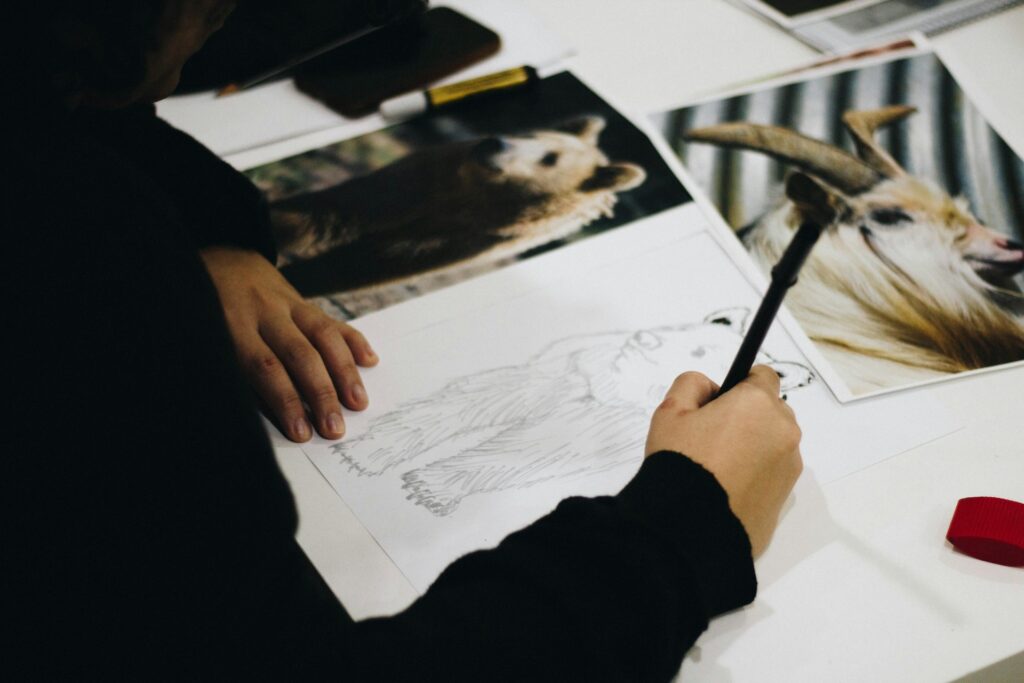
If drawing in public feels intimidating, practice at home using your travel photos. This helps build confidence without the pressure of people watching. Once you’re more comfortable, you’ll find it easier to pull out your sketchbook in a café, park, or street corner. The more you sketch, the more natural it will feel.
9. Find a Sketching Spot That Feels Comfortable
Some places are easier to sketch than others. A quiet café, park bench, or seaside boardwalk is a great place to start.
Avoid areas where you feel rushed or where people might constantly stop to watch. The more relaxed you are, the more you’ll enjoy the process.
Over time, you’ll get used to sketching anywhere—on a train, at a busy market, or even while standing in line.
10. Make It a Daily Habit (Even for 5 Minutes)
Like anything, the more you do it, the better you get. Set aside 5-10 minutes daily to sketch, whether at home or while traveling.
It could be as simple as drawing your coffee cup, a plant, or a streetlight. The key is to make sketching feel casual rather than a big production.
Daily practice builds confidence—and soon, sketching will become second nature.
Your Travel Memories, One Sketch at a Time
The act of drawing slows you down, helping you notice the little details that often go unnoticed. With each sketch, you’ll create a personal travel story—one that’s uniquely yours. So grab a pen, start sketching, and let your journey unfold like no photo ever could.

Related posts:
 Capture Instagram-Worthy Travel Photos With Just Your Smartphone: Pro Tips Revealed
 Beyond the Boring Diary: 12 Creative Travel Journal Ideas to Preserve Your Memories
 Breeze Through Security: 7 Airport Hacks That Will Change Your Travel Life
 Go Viral: Pro Tips for Creating Jaw-Dropping Travel Videos (Even as a Beginner)